UI / UX Design
Bubs
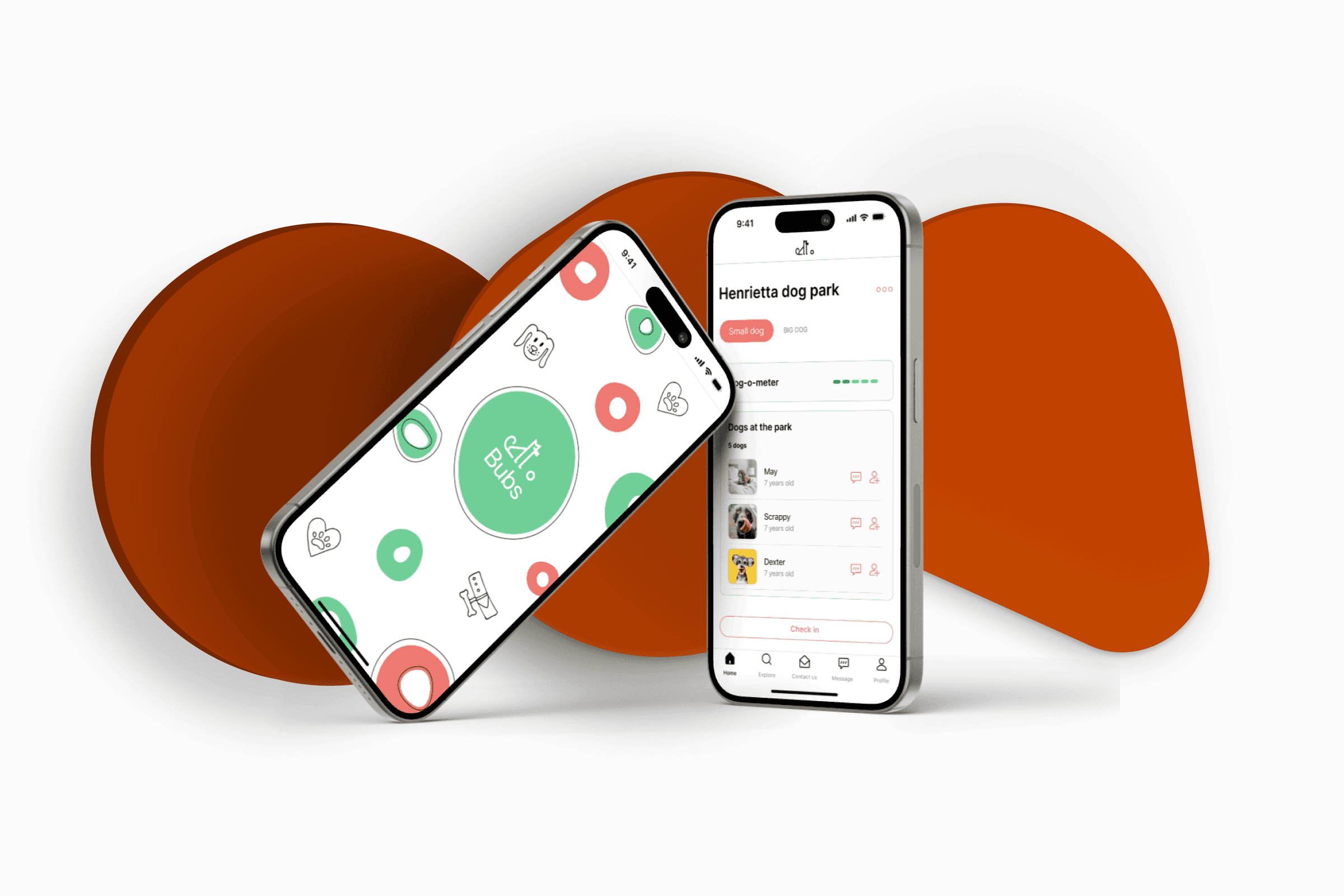
Designing a mobile application for dog owners to connect and manage access to the park in Monroe County, New York.
Year :
2024
Role :
UI/UX Designer
Client :
Monroe County
Project Duration :
4 weeks
CONTEXT
Creating A One-Stop Hub For Dog Parents
As the UI/UX Designer, I led the design of Bubs, a mobile app for registered dog owners in Monroe County. The app replaces outdated access methods like physical cards and PIN codes with a digital barcode system, while also enabling users to track park activity and connect with other dog owners.
PERSONAS
Different Type Of Dogs, Different Type Of Owners
Dog Parent
Katie is a dog owner in Rochester who needs an easy way to access dog parks, check activity, and connect with other owners to plan visits that best suit her dog.
People-Friendly Dogs
Bambino is an active 6-year-old bulldog who needs to know the park’s activity level because it helps him have a low-stress experience, socialize with people, and avoid overwhelming interactions with other dogs.
Dog-Friendly Dogs
Chai is a 1-year-old Maltipoo who needs to see park activity levels and connect with others through the app to have a safe, low-pressure experience and build confidence in new environments.
GROWING PAINS
Situational Adaptability
Strategic Focus
The current system is complicated because it's split between old-school paperwork from a physical location, and online website. Because the user journey was complex, I focused my research on the direct user experience, using qualitative interviews to identify pain points.
Current User Journey
Online Application → Approval → In-Person ID Card Pickup → Park Access
(Users have to apply online, then head to a physical location.)
Research Insights
Access Feels Like a Responsibility
Users find physical cards and PINs inconvenient, often losing them or forgetting PINs, which causes frustration.
Dog Parents Feel Unsafe
Owners of reactive dogs feel unsafe because they dont have clear information about crowd spikes, so they avoid certain Monroe County dog parks or specific times.
Informal Networks
There is a strong dog park community, but key information (events, maintenance, aggressive dog alerts) stays within word-of-mouth, making the park less accessible to newcomers.
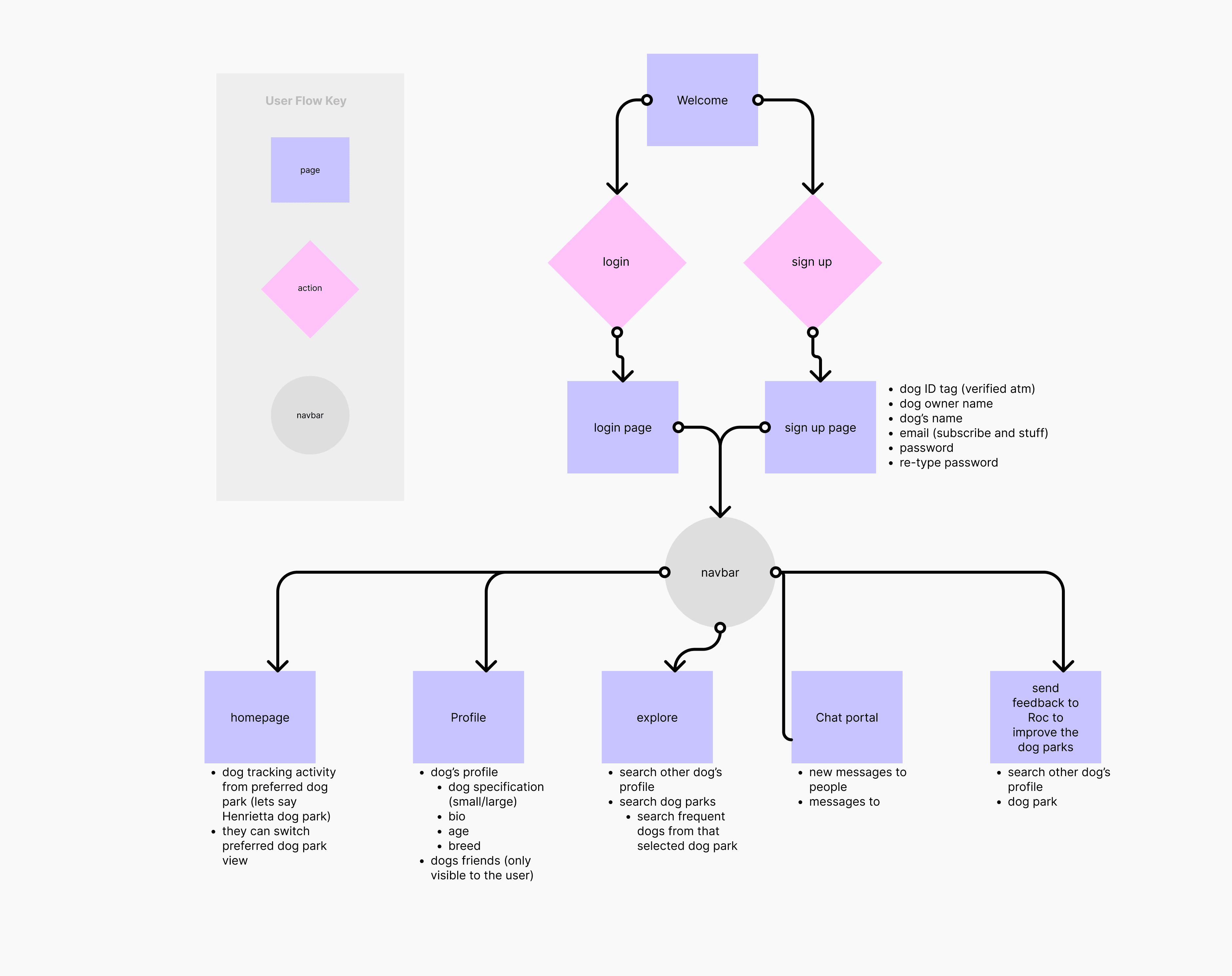
Refined User Journey
Interviews shifted the focus of the app, the real pain points weren't the application, but informal communication, safety concerns, and the complex ID cards to access the parks.
Therefore the existing journey stayed intact, but the app's focus moved to supporting users based on their pain points.
Summary
My ability to adapt was important because it revealed the real problem went the set up process of getting approved to access the dog parks but it instead was focused on 3 pain points: safety, communication, and convenience. I demonstrated situational adaptability because I shifted my focus accordingly.
Optimizing Work Processes
Intentional User Testing from Lo-Fi to Hi-Fi
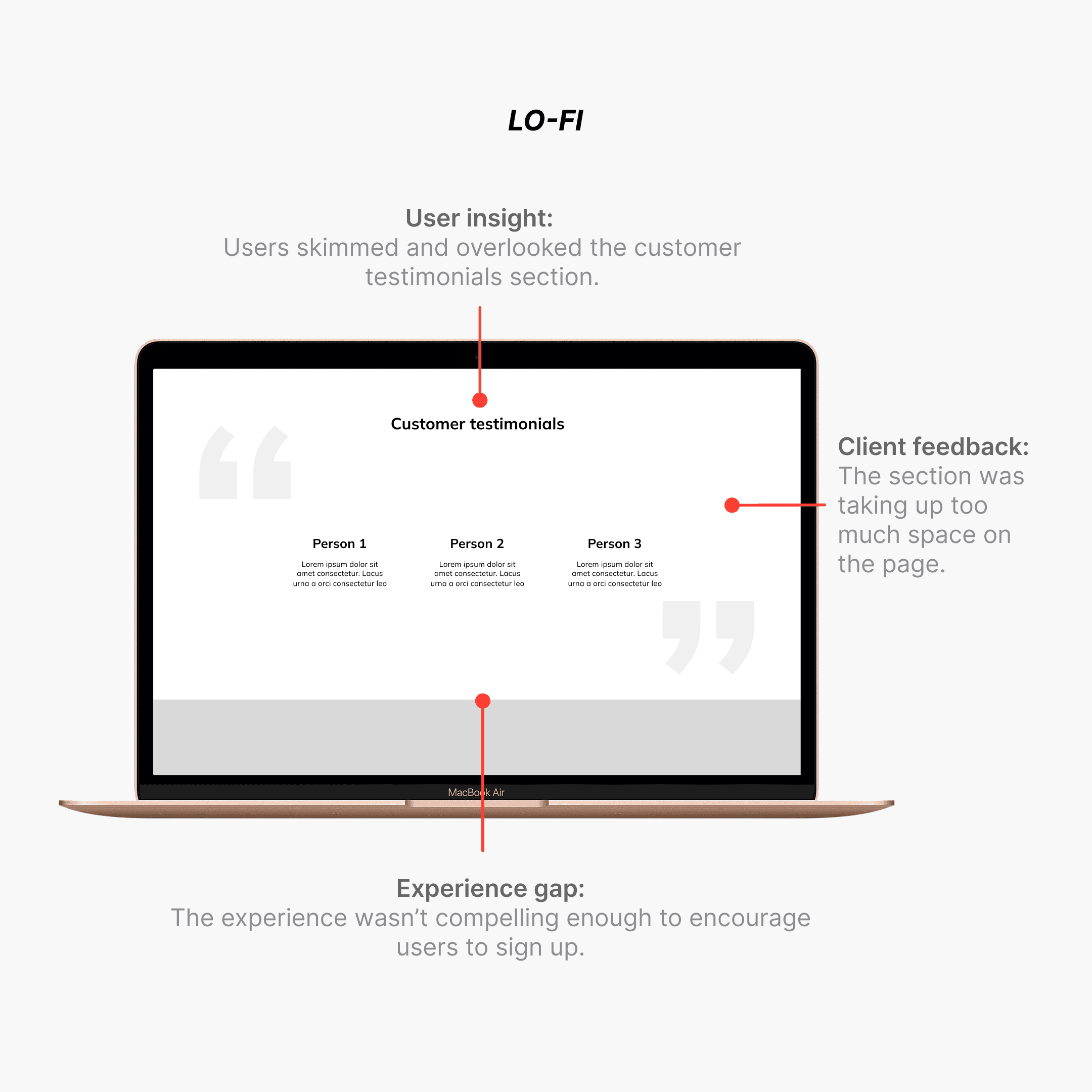
To optimize the design process, I used A/B testing to make measurable decisions between two versions of the profile page.
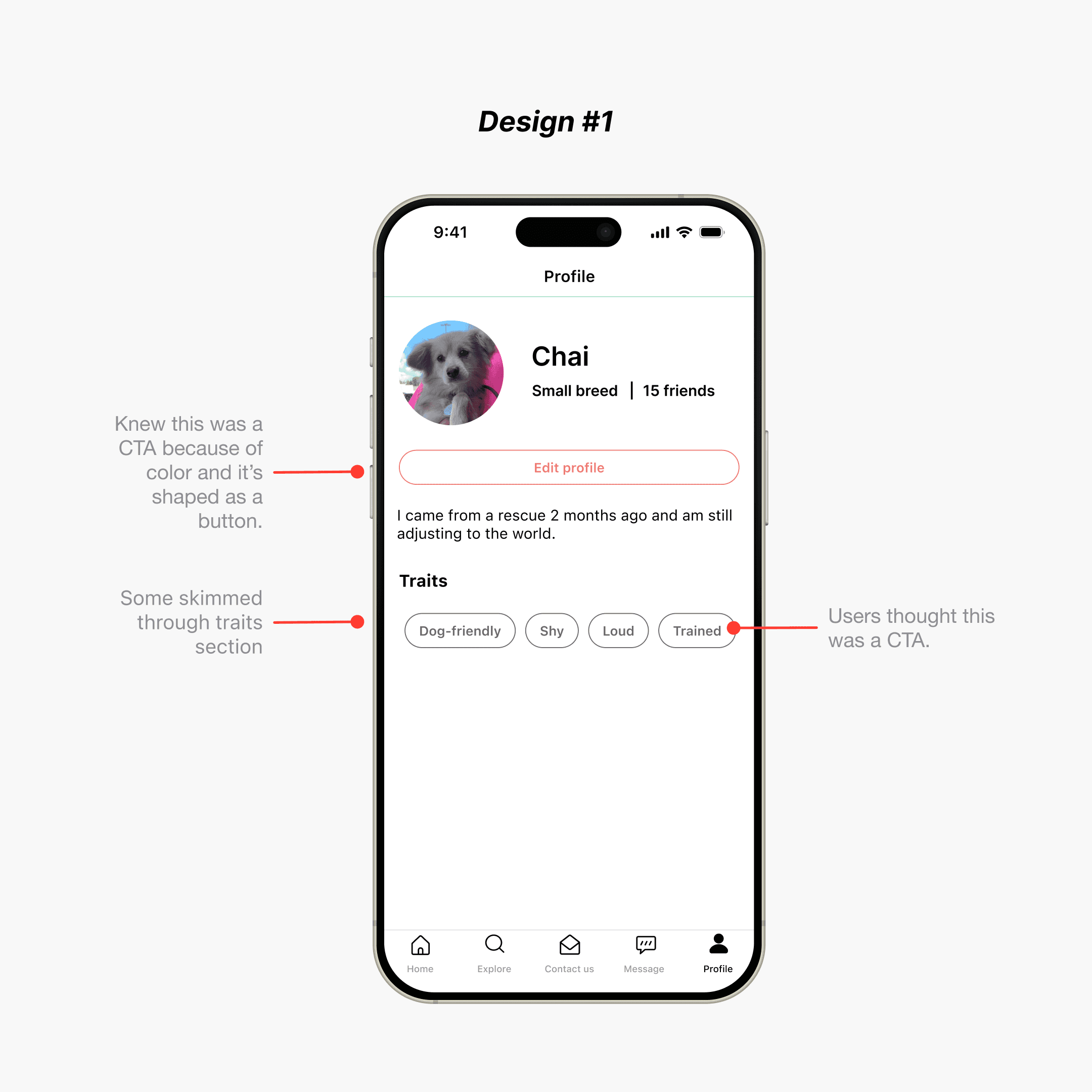
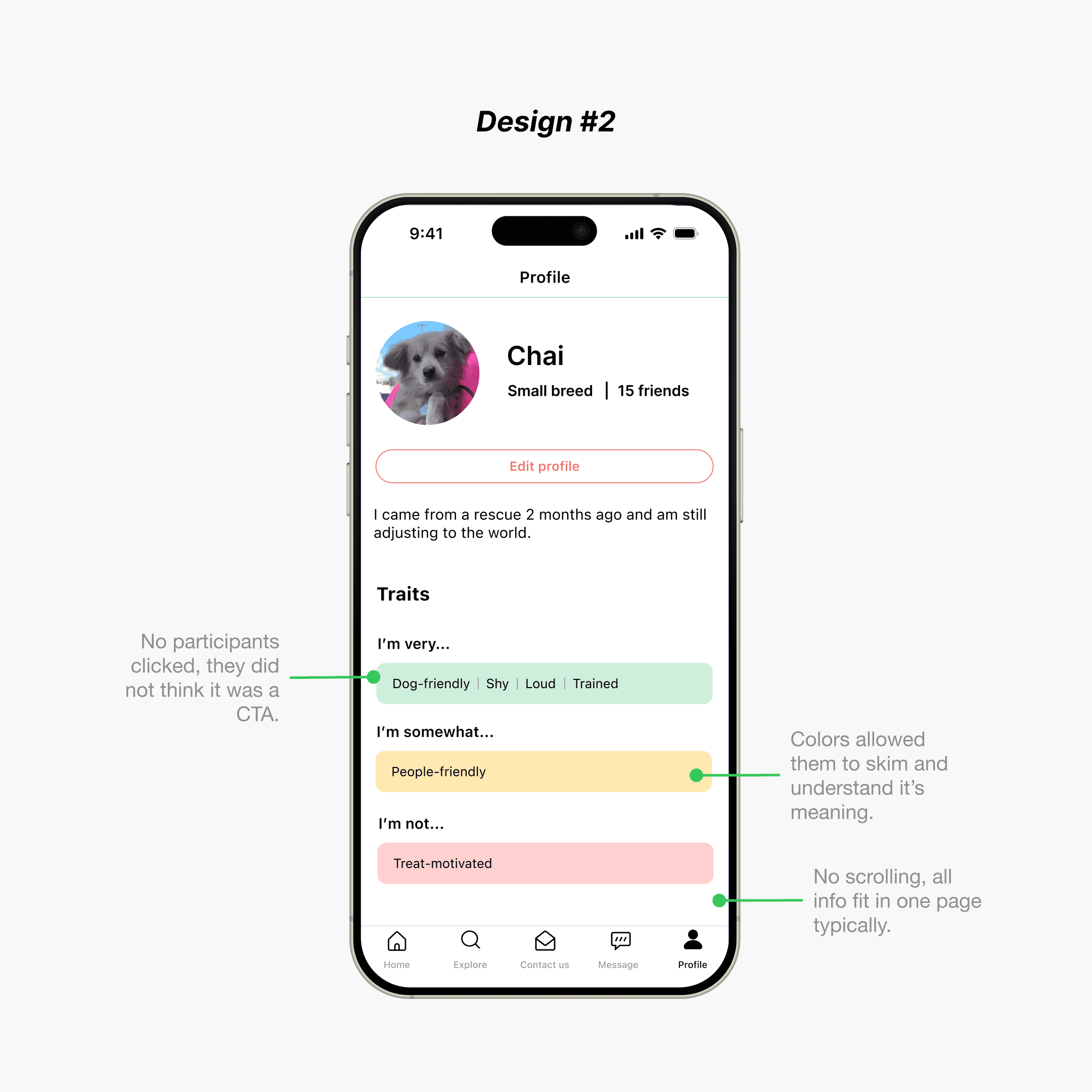
Outcome
A/B testing was the idea work process because it embedded a feedback loop, which turned design decisions measurable.
Since the design decisions became measurable it was easy to spot what worked, made the workflow simpler.
GROWING PAINS
Situational Adaptability
Strategic Focus
The current system is complicated because it's split between old-school paperwork from a physical location, and online website. Because the user journey was complex, I focused my research on the direct user experience, using qualitative interviews to identify pain points.
Current User Journey
Online Application → Approval → In-Person ID Card Pickup → Park Access
(Users have to apply online, then head to a physical location.)
Research Insights
Access Feels Like a Responsibility
Users find physical cards and PINs inconvenient, often losing them or forgetting PINs, which causes frustration.
Dog Parents Feel Unsafe
Owners of reactive dogs feel unsafe because they dont have clear information about crowd spikes, so they avoid certain Monroe County dog parks or specific times.
Informal Networks
There is a strong dog park community, but key information (events, maintenance, aggressive dog alerts) stays within word-of-mouth, making the park less accessible to newcomers.
Refined User Journey
Interviews shifted the focus of the app, the real pain points weren't the application, but informal communication, safety concerns, and the complex ID cards to access the parks.
Therefore the existing journey stayed intact, but the app's focus moved to supporting users based on their pain points.
Summary
My ability to adapt was important because it revealed the real problem went the set up process of getting approved to access the dog parks but it instead was focused on 3 pain points: safety, communication, and convenience. I demonstrated situational adaptability because I shifted my focus accordingly.
Optimizing Work Processes
Intentional User Testing from Lo-Fi to Hi-Fi
To optimize the design process, I used A/B testing to make measurable decisions between two versions of the profile page.
Outcome
A/B testing was the idea work process because it embedded a feedback loop, which turned design decisions measurable.
Since the design decisions became measurable it was easy to spot what worked, made the workflow simpler.
RETROSPECTIVE
Key Takeaways
What Went Well: Qualitative Research helped uncover and refine assumptions.
What I Would Do Differently: Loop in stakeholders earlier. Their familiarity with the customer journey would have challenged my initial assumptions sooner and saved significant time in the research phase.
Key Takeaways: Letting research lead over assumptions keeps the project simpler and impactful.
Figma Links
More Projects

Protected preview
New release
Preview
UI / UX Design
Bubs
Designing a mobile application for dog owners to connect and manage access to the park in Monroe County, New York.
Year :
2024
Role :
UI/UX Designer
Client :
Monroe County
Project Duration :
4 weeks
CONTEXT
Creating A One-Stop Hub For Dog Parents
As the UI/UX Designer, I led the design of Bubs, a mobile app for registered dog owners in Monroe County. The app replaces outdated access methods like physical cards and PIN codes with a digital barcode system, while also enabling users to track park activity and connect with other dog owners.
PERSONAS
Different Type Of Dogs, Different Type Of Owners
Dog Parent
Katie is a dog owner in Rochester who needs an easy way to access dog parks, check activity, and connect with other owners to plan visits that best suit her dog.
People-Friendly Dogs
Bambino is an active 6-year-old bulldog who needs to know the park’s activity level because it helps him have a low-stress experience, socialize with people, and avoid overwhelming interactions with other dogs.
Dog-Friendly Dogs
Chai is a 1-year-old Maltipoo who needs to see park activity levels and connect with others through the app to have a safe, low-pressure experience and build confidence in new environments.
GROWING PAINS
Situational Adaptability
Strategic Focus
The current system is complicated because it's split between old-school paperwork from a physical location, and online website. Because the user journey was complex, I focused my research on the direct user experience, using qualitative interviews to identify pain points.
Current User Journey
Online Application → Approval → In-Person ID Card Pickup → Park Access
(Users have to apply online, then head to a physical location.)
Research Insights
Access Feels Like a Responsibility
Users find physical cards and PINs inconvenient, often losing them or forgetting PINs, which causes frustration.
Dog Parents Feel Unsafe
Owners of reactive dogs feel unsafe because they dont have clear information about crowd spikes, so they avoid certain Monroe County dog parks or specific times.
Informal Networks
There is a strong dog park community, but key information (events, maintenance, aggressive dog alerts) stays within word-of-mouth, making the park less accessible to newcomers.
Refined User Journey
Interviews shifted the focus of the app, the real pain points weren't the application, but informal communication, safety concerns, and the complex ID cards to access the parks.
Therefore the existing journey stayed intact, but the app's focus moved to supporting users based on their pain points.
Summary
My ability to adapt was important because it revealed the real problem went the set up process of getting approved to access the dog parks but it instead was focused on 3 pain points: safety, communication, and convenience. I demonstrated situational adaptability because I shifted my focus accordingly.
Optimizing Work Processes
Intentional User Testing from Lo-Fi to Hi-Fi
To optimize the design process, I used A/B testing to make measurable decisions between two versions of the profile page.
Outcome
A/B testing was the idea work process because it embedded a feedback loop, which turned design decisions measurable.
Since the design decisions became measurable it was easy to spot what worked, made the workflow simpler.
GROWING PAINS
Situational Adaptability
Strategic Focus
The current system is complicated because it's split between old-school paperwork from a physical location, and online website. Because the user journey was complex, I focused my research on the direct user experience, using qualitative interviews to identify pain points.
Current User Journey
Online Application → Approval → In-Person ID Card Pickup → Park Access
(Users have to apply online, then head to a physical location.)
Research Insights
Access Feels Like a Responsibility
Users find physical cards and PINs inconvenient, often losing them or forgetting PINs, which causes frustration.
Dog Parents Feel Unsafe
Owners of reactive dogs feel unsafe because they dont have clear information about crowd spikes, so they avoid certain Monroe County dog parks or specific times.
Informal Networks
There is a strong dog park community, but key information (events, maintenance, aggressive dog alerts) stays within word-of-mouth, making the park less accessible to newcomers.
Refined User Journey
Interviews shifted the focus of the app, the real pain points weren't the application, but informal communication, safety concerns, and the complex ID cards to access the parks.
Therefore the existing journey stayed intact, but the app's focus moved to supporting users based on their pain points.
Summary
My ability to adapt was important because it revealed the real problem went the set up process of getting approved to access the dog parks but it instead was focused on 3 pain points: safety, communication, and convenience. I demonstrated situational adaptability because I shifted my focus accordingly.
Optimizing Work Processes
Intentional User Testing from Lo-Fi to Hi-Fi
To optimize the design process, I used A/B testing to make measurable decisions between two versions of the profile page.
Outcome
A/B testing was the idea work process because it embedded a feedback loop, which turned design decisions measurable.
Since the design decisions became measurable it was easy to spot what worked, made the workflow simpler.
RETROSPECTIVE
Key Takeaways
What Went Well: Qualitative Research helped uncover and refine assumptions.
What I Would Do Differently: Loop in stakeholders earlier. Their familiarity with the customer journey would have challenged my initial assumptions sooner and saved significant time in the research phase.
Key Takeaways: Letting research lead over assumptions keeps the project simpler and impactful.
Figma Links
More Projects
Protected preview
New release
Preview
UI / UX Design
Bubs
Designing a mobile application for dog owners to connect and manage access to the park in Monroe County, New York.
Year :
2024
Role :
UI/UX Designer
Client :
Monroe County
Project Duration :
4 weeks
CONTEXT
Creating A One-Stop Hub For Dog Parents
As the UI/UX Designer, I led the design of Bubs, a mobile app for registered dog owners in Monroe County. The app replaces outdated access methods like physical cards and PIN codes with a digital barcode system, while also enabling users to track park activity and connect with other dog owners.
PERSONAS
Different Type Of Dogs, Different Type Of Owners
Dog Parent
Katie is a dog owner in Rochester who needs an easy way to access dog parks, check activity, and connect with other owners to plan visits that best suit her dog.
People-Friendly Dogs
Bambino is an active 6-year-old bulldog who needs to know the park’s activity level because it helps him have a low-stress experience, socialize with people, and avoid overwhelming interactions with other dogs.
Dog-Friendly Dogs
Chai is a 1-year-old Maltipoo who needs to see park activity levels and connect with others through the app to have a safe, low-pressure experience and build confidence in new environments.
GROWING PAINS
Situational Adaptability
Strategic Focus
The current system is complicated because it's split between old-school paperwork from a physical location, and online website. Because the user journey was complex, I focused my research on the direct user experience, using qualitative interviews to identify pain points.
Current User Journey
Online Application → Approval → In-Person ID Card Pickup → Park Access
(Users have to apply online, then head to a physical location.)
Research Insights
Access Feels Like a Responsibility
Users find physical cards and PINs inconvenient, often losing them or forgetting PINs, which causes frustration.
Dog Parents Feel Unsafe
Owners of reactive dogs feel unsafe because they dont have clear information about crowd spikes, so they avoid certain Monroe County dog parks or specific times.
Informal Networks
There is a strong dog park community, but key information (events, maintenance, aggressive dog alerts) stays within word-of-mouth, making the park less accessible to newcomers.
Refined User Journey
Interviews shifted the focus of the app, the real pain points weren't the application, but informal communication, safety concerns, and the complex ID cards to access the parks.
Therefore the existing journey stayed intact, but the app's focus moved to supporting users based on their pain points.
Summary
My ability to adapt was important because it revealed the real problem went the set up process of getting approved to access the dog parks but it instead was focused on 3 pain points: safety, communication, and convenience. I demonstrated situational adaptability because I shifted my focus accordingly.
Optimizing Work Processes
Intentional User Testing from Lo-Fi to Hi-Fi
To optimize the design process, I used A/B testing to make measurable decisions between two versions of the profile page.
Outcome
A/B testing was the idea work process because it embedded a feedback loop, which turned design decisions measurable.
Since the design decisions became measurable it was easy to spot what worked, made the workflow simpler.
GROWING PAINS
Situational Adaptability
Strategic Focus
The current system is complicated because it's split between old-school paperwork from a physical location, and online website. Because the user journey was complex, I focused my research on the direct user experience, using qualitative interviews to identify pain points.
Current User Journey
Online Application → Approval → In-Person ID Card Pickup → Park Access
(Users have to apply online, then head to a physical location.)
Research Insights
Access Feels Like a Responsibility
Users find physical cards and PINs inconvenient, often losing them or forgetting PINs, which causes frustration.
Dog Parents Feel Unsafe
Owners of reactive dogs feel unsafe because they dont have clear information about crowd spikes, so they avoid certain Monroe County dog parks or specific times.
Informal Networks
There is a strong dog park community, but key information (events, maintenance, aggressive dog alerts) stays within word-of-mouth, making the park less accessible to newcomers.
Refined User Journey
Interviews shifted the focus of the app, the real pain points weren't the application, but informal communication, safety concerns, and the complex ID cards to access the parks.
Therefore the existing journey stayed intact, but the app's focus moved to supporting users based on their pain points.
Summary
My ability to adapt was important because it revealed the real problem went the set up process of getting approved to access the dog parks but it instead was focused on 3 pain points: safety, communication, and convenience. I demonstrated situational adaptability because I shifted my focus accordingly.
Optimizing Work Processes
Intentional User Testing from Lo-Fi to Hi-Fi
To optimize the design process, I used A/B testing to make measurable decisions between two versions of the profile page.
Outcome
A/B testing was the idea work process because it embedded a feedback loop, which turned design decisions measurable.
Since the design decisions became measurable it was easy to spot what worked, made the workflow simpler.
RETROSPECTIVE
Key Takeaways
What Went Well: Qualitative Research helped uncover and refine assumptions.
What I Would Do Differently: Loop in stakeholders earlier. Their familiarity with the customer journey would have challenged my initial assumptions sooner and saved significant time in the research phase.
Key Takeaways: Letting research lead over assumptions keeps the project simpler and impactful.
Figma Links
More Projects
Protected preview
New release
Preview