Web Design
Dreamers Magazine, An Apple Retail Publication
Led the creative direction at Apple Retail to highlight team members and celebrate diversity through storytelling.
Year :
2026
Role :
Creative Director
Client :
Apple
Project Duration :
Every 4 Weeks

CONTEXT
Building a community within Apple Retail
To strengthen community and build meaningful relationships across the Apple team in American Dream , I initiated and led Dreamers, our first internal magazine. As Creative Director, I used visual storytelling to celebrate team members and bring Apple’s belief to life.
INITIATING THE PROJECT
Attracting top talent
I knew this project had the potential to make a meaningful impact, but it would take more than one perspective to bring it to life.
The strongest projects are built through collaboration and diverse viewpoints, so I assembled a team from the professional relationships I had developed at the Apple Store. I sought out colleagues who were passionate about Apple’s values, invested in strengthening team morale, and eager to learn and contribute. By bringing together people with different strengths and perspectives, I collaborated closely with…
THE CREATIVE TEAM

People Manager
Area of focus: Project advocacy, team leadership, and fostering collaboration.
Creative @ Apple Retail
Area of focus: Journalism, photography, storytelling, and creating meaningful human connections.
Specialist @ Apple Retail (My Role)
Area of focus: Creative direction, visual design, and incorporating user feedback to shape engaging experiences.
GROWING PAINS
Optimizing Work Processes
Choosing the Right Tool
Our team initially chose Adobe InDesign because of my previous experience designing digital content, and after research it was the most known platform to build a magazine.
Challenge
Since I was the only team member experienced with InDesign, the team spent more time learning the platform than creating the magazine. With limited project hours each month, this significantly slowed our progress.
Brainstorming
I identified the team's core requirements before selecting a new platform:
Accessible
Easy for current and future team members to learn, regardless of design experience.
Simple
Minimize the learning curve so project time could be spent creating content instead of learning software.
Time-efficient
Learning and mastering the software can be done on the sales floor on Apple's demo devices
Solution
After researching several options, we realized the solution was right in front of us. As Apple Retail employees, we already had access to Apple's services. Apple Pages met all of our priorities; it was collaborative, intuitive, and easy for anyone on the team to learn.
Because Apple Pages was preinstalled on every demo Mac, the team could learn during non-peak hours on the floor.
Results
We optimized our design process, cutting turnaround time by 50%.
Transitioning to Pages made the team feel supported while fostering collaboration. Seeing us learn and build Dreamers on the sales floor encouraged other teammates to pursue their own passion projects. We made an impact.
Design
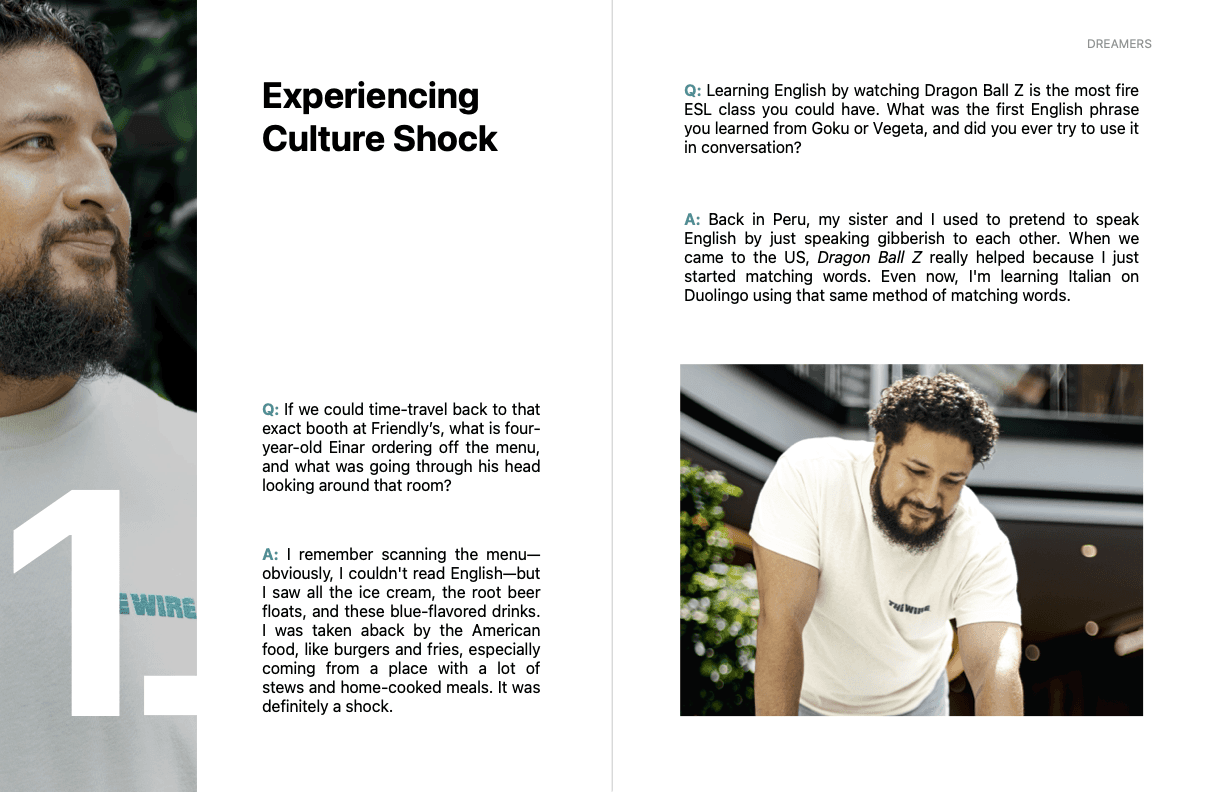
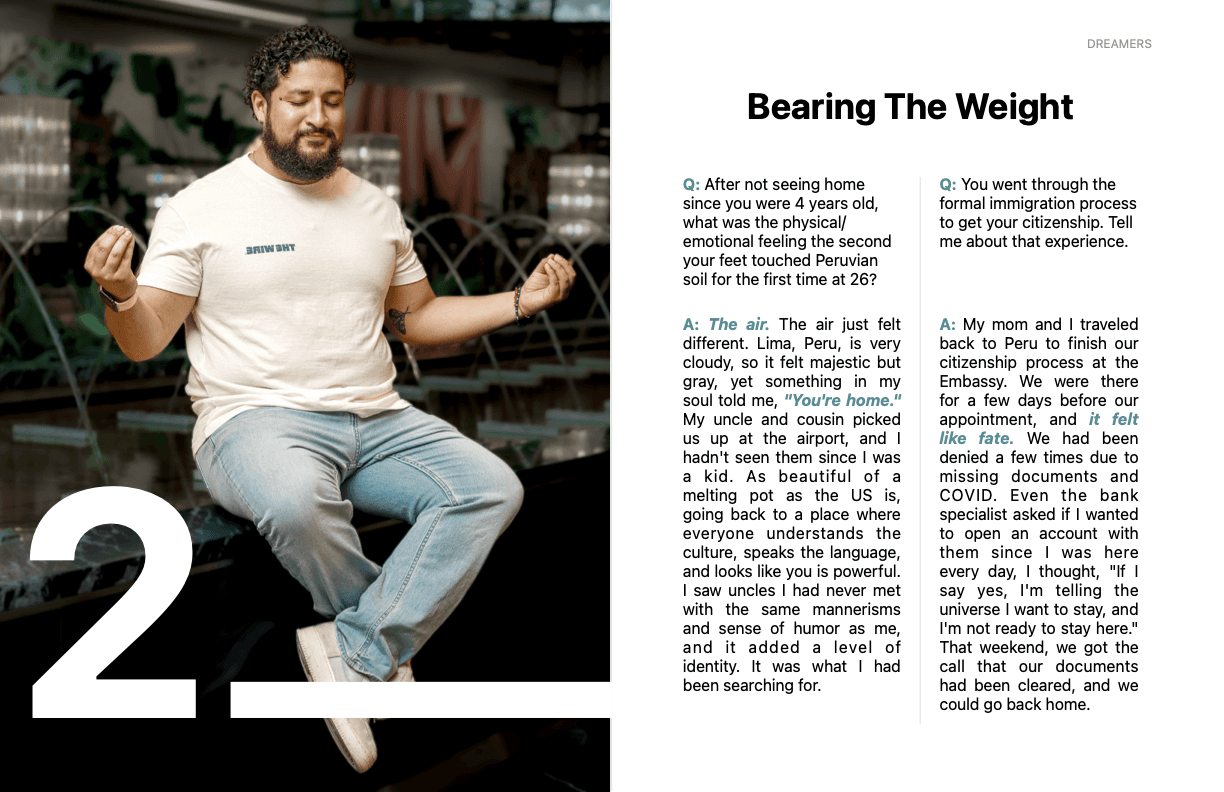
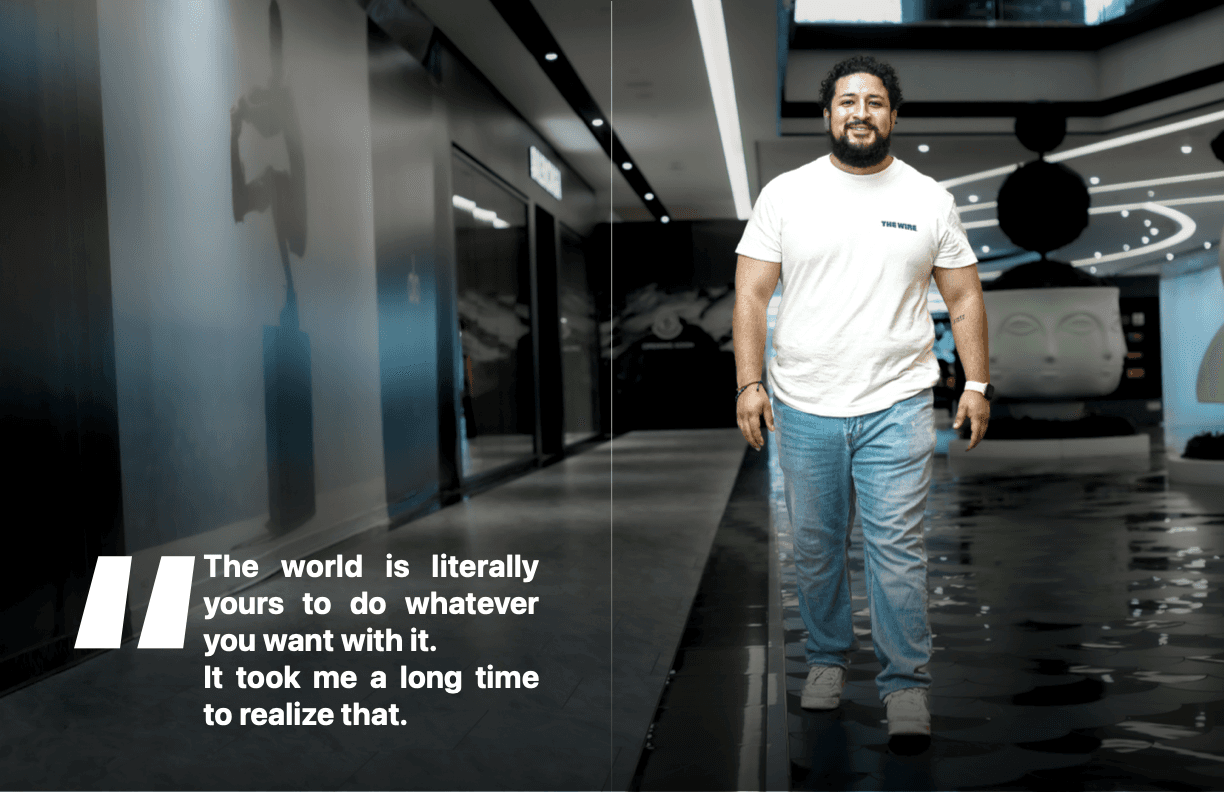
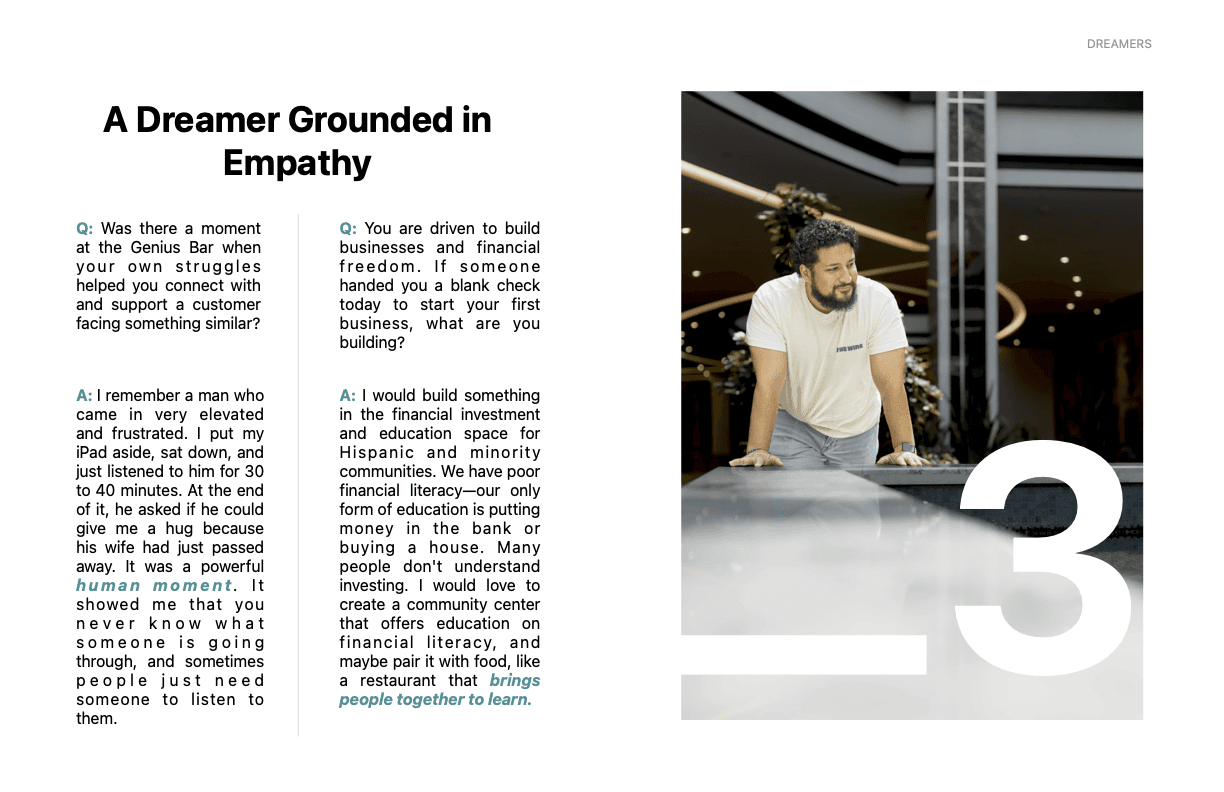
Volume 06 of Dreamers

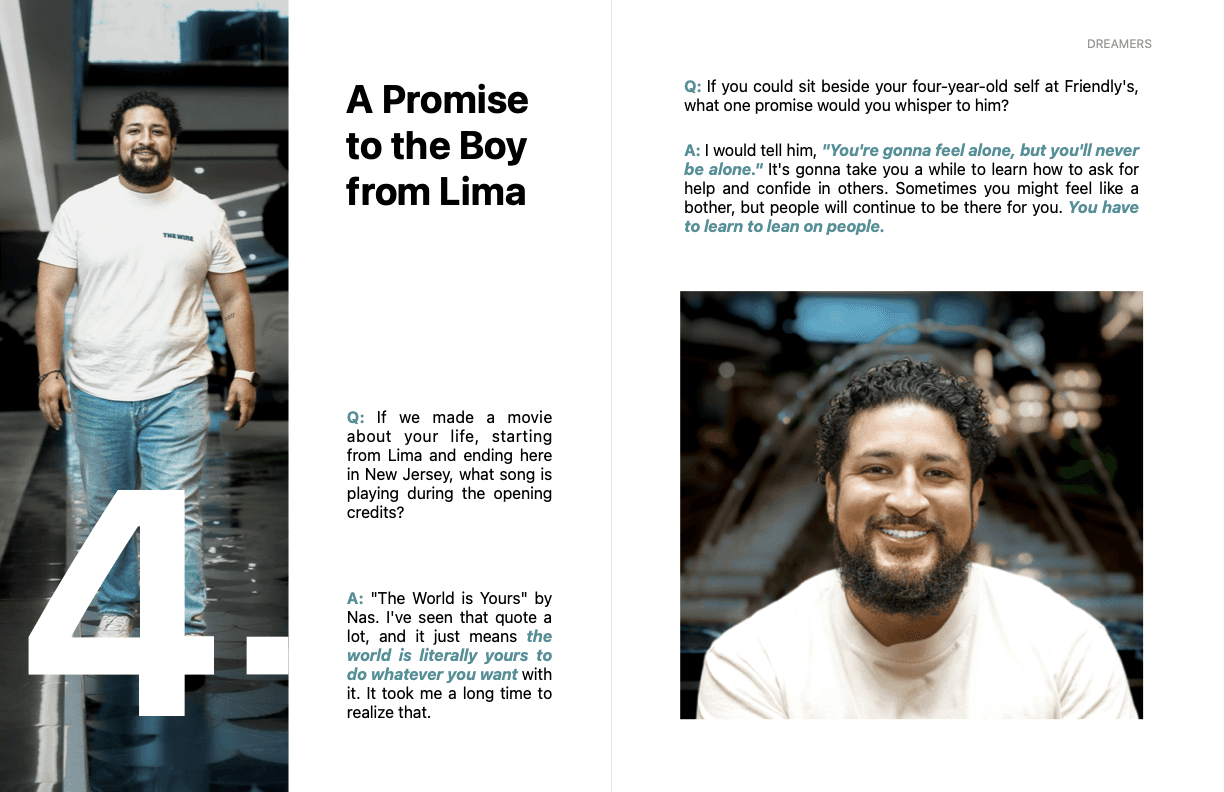
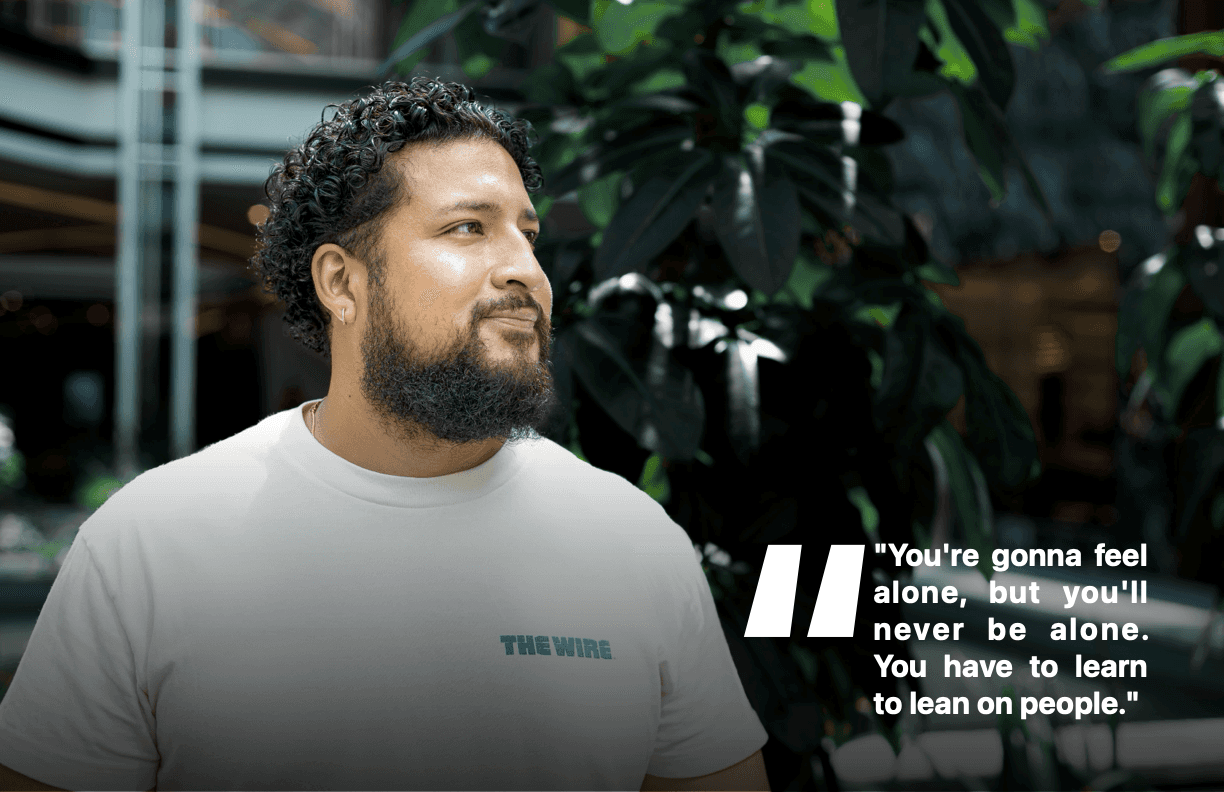
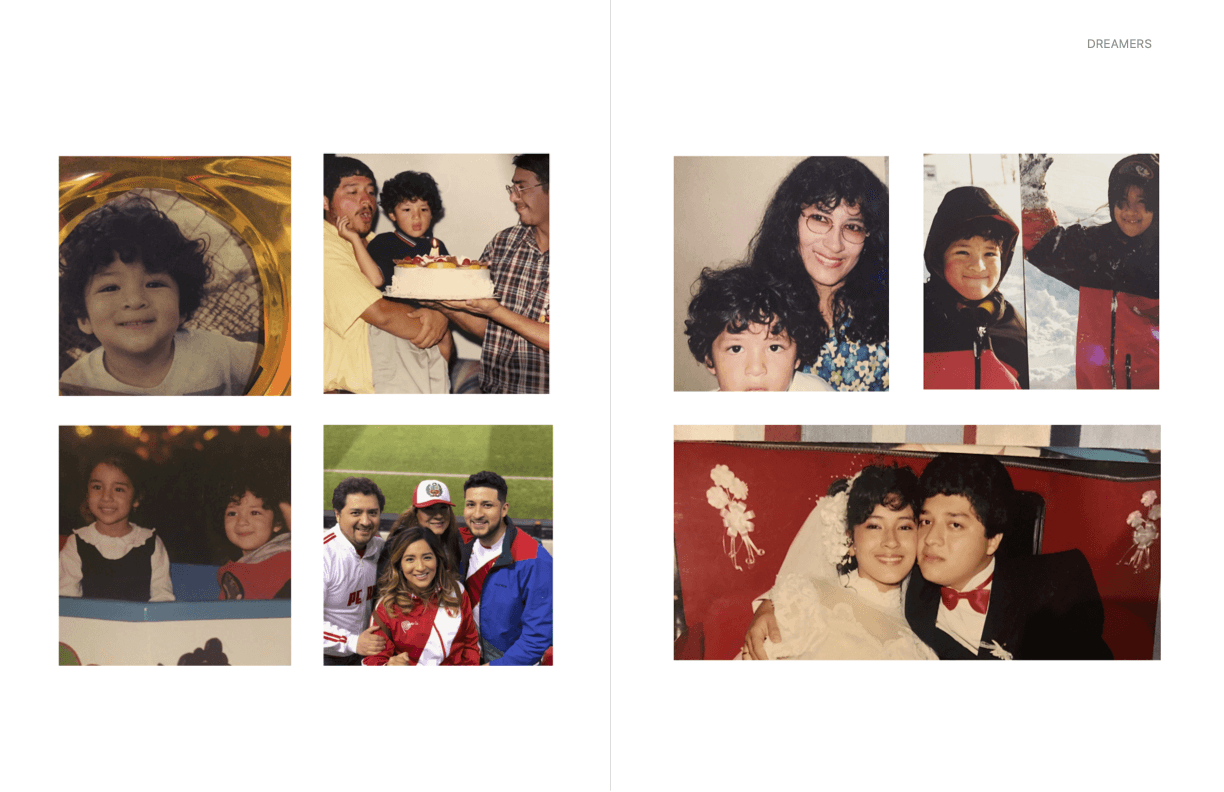
GROWING PAINS
Optimizing Work Processes
Choosing the Right Tool
Our team initially chose Adobe InDesign because of my previous experience designing digital content, and after research it was the most known platform to build a magazine.
Challenge
Since I was the only team member experienced with InDesign, the team spent more time learning the platform than creating the magazine. With limited project hours each month, this significantly slowed our progress.
Brainstorming
I identified the team's core requirements before selecting a new platform:
Accessible
Easy for current and future team members to learn, regardless of design experience.
Simple
Minimize the learning curve so project time could be spent creating content instead of learning software.
Time-efficient
Learning and mastering the software can be done on the sales floor on Apple's demo devices
Solution
After researching several options, we realized the solution was right in front of us. As Apple Retail employees, we already had access to Apple's services. Apple Pages met all of our priorities; it was collaborative, intuitive, and easy for anyone on the team to learn.
Because Apple Pages was preinstalled on every demo Mac, the team could learn during non-peak hours on the floor.
Results
We optimized our design process, cutting turnaround time by 50%.
Transitioning to Pages made the team feel supported while fostering collaboration. Seeing us learn and build Dreamers on the sales floor encouraged other teammates to pursue their own passion projects. We made an impact.
Design
Volume 06 of Dreamers
RETROSPECTIVE
Reflection
This project changed the way I approach leadership. It taught me to make decisions based on facts while always keeping my team in mind. When people feel valued and supported, they show up as their best selves. Human connection is so important and it makes all the difference.
More Projects
Protected preview
New release
Preview
Web Design
Dreamers Magazine, An Apple Retail Publication
Led the creative direction at Apple Retail to highlight team members and celebrate diversity through storytelling.
Year :
2026
Role :
Creative Director
Client :
Apple
Project Duration :
Every 4 Weeks
CONTEXT
Building a community within Apple Retail
To strengthen community and build meaningful relationships across the Apple team in American Dream , I initiated and led Dreamers, our first internal magazine. As Creative Director, I used visual storytelling to celebrate team members and bring Apple’s belief to life.
INITIATING THE PROJECT
Attracting top talent
I knew this project had the potential to make a meaningful impact, but it would take more than one perspective to bring it to life.
The strongest projects are built through collaboration and diverse viewpoints, so I assembled a team from the professional relationships I had developed at the Apple Store. I sought out colleagues who were passionate about Apple’s values, invested in strengthening team morale, and eager to learn and contribute. By bringing together people with different strengths and perspectives, I collaborated closely with…
THE CREATIVE TEAM
People Manager
Area of focus: Project advocacy, team leadership, and fostering collaboration.
Creative @ Apple Retail
Area of focus: Journalism, photography, storytelling, and creating meaningful human connections.
Specialist @ Apple Retail (My Role)
Area of focus: Creative direction, visual design, and incorporating user feedback to shape engaging experiences.
GROWING PAINS
Optimizing Work Processes
Choosing the Right Tool
Our team initially chose Adobe InDesign because of my previous experience designing digital content, and after research it was the most known platform to build a magazine.
Challenge
Since I was the only team member experienced with InDesign, the team spent more time learning the platform than creating the magazine. With limited project hours each month, this significantly slowed our progress.
Brainstorming
I identified the team's core requirements before selecting a new platform:
Accessible
Easy for current and future team members to learn, regardless of design experience.
Simple
Minimize the learning curve so project time could be spent creating content instead of learning software.
Time-efficient
Learning and mastering the software can be done on the sales floor on Apple's demo devices
Solution
After researching several options, we realized the solution was right in front of us. As Apple Retail employees, we already had access to Apple's services. Apple Pages met all of our priorities; it was collaborative, intuitive, and easy for anyone on the team to learn.
Because Apple Pages was preinstalled on every demo Mac, the team could learn during non-peak hours on the floor.
Results
We optimized our design process, cutting turnaround time by 50%.
Transitioning to Pages made the team feel supported while fostering collaboration. Seeing us learn and build Dreamers on the sales floor encouraged other teammates to pursue their own passion projects. We made an impact.
Design
Volume 06 of Dreamers
GROWING PAINS
Optimizing Work Processes
Choosing the Right Tool
Our team initially chose Adobe InDesign because of my previous experience designing digital content, and after research it was the most known platform to build a magazine.
Challenge
Since I was the only team member experienced with InDesign, the team spent more time learning the platform than creating the magazine. With limited project hours each month, this significantly slowed our progress.
Brainstorming
I identified the team's core requirements before selecting a new platform:
Accessible
Easy for current and future team members to learn, regardless of design experience.
Simple
Minimize the learning curve so project time could be spent creating content instead of learning software.
Time-efficient
Learning and mastering the software can be done on the sales floor on Apple's demo devices
Solution
After researching several options, we realized the solution was right in front of us. As Apple Retail employees, we already had access to Apple's services. Apple Pages met all of our priorities; it was collaborative, intuitive, and easy for anyone on the team to learn.
Because Apple Pages was preinstalled on every demo Mac, the team could learn during non-peak hours on the floor.
Results
We optimized our design process, cutting turnaround time by 50%.
Transitioning to Pages made the team feel supported while fostering collaboration. Seeing us learn and build Dreamers on the sales floor encouraged other teammates to pursue their own passion projects. We made an impact.
Design
Volume 06 of Dreamers
RETROSPECTIVE
Reflection
This project changed the way I approach leadership. It taught me to make decisions based on facts while always keeping my team in mind. When people feel valued and supported, they show up as their best selves. Human connection is so important and it makes all the difference.
More Projects
Protected preview
New release
Preview
Web Design
Dreamers Magazine, An Apple Retail Publication
Led the creative direction at Apple Retail to highlight team members and celebrate diversity through storytelling.
Year :
2026
Role :
Creative Director
Client :
Apple
Project Duration :
Every 4 Weeks
CONTEXT
Building a community within Apple Retail
To strengthen community and build meaningful relationships across the Apple team in American Dream , I initiated and led Dreamers, our first internal magazine. As Creative Director, I used visual storytelling to celebrate team members and bring Apple’s belief to life.
INITIATING THE PROJECT
Attracting top talent
I knew this project had the potential to make a meaningful impact, but it would take more than one perspective to bring it to life.
The strongest projects are built through collaboration and diverse viewpoints, so I assembled a team from the professional relationships I had developed at the Apple Store. I sought out colleagues who were passionate about Apple’s values, invested in strengthening team morale, and eager to learn and contribute. By bringing together people with different strengths and perspectives, I collaborated closely with…
THE CREATIVE TEAM
People Manager
Area of focus: Project advocacy, team leadership, and fostering collaboration.
Creative @ Apple Retail
Area of focus: Journalism, photography, storytelling, and creating meaningful human connections.
Specialist @ Apple Retail (My Role)
Area of focus: Creative direction, visual design, and incorporating user feedback to shape engaging experiences.
GROWING PAINS
Optimizing Work Processes
Choosing the Right Tool
Our team initially chose Adobe InDesign because of my previous experience designing digital content, and after research it was the most known platform to build a magazine.
Challenge
Since I was the only team member experienced with InDesign, the team spent more time learning the platform than creating the magazine. With limited project hours each month, this significantly slowed our progress.
Brainstorming
I identified the team's core requirements before selecting a new platform:
Accessible
Easy for current and future team members to learn, regardless of design experience.
Simple
Minimize the learning curve so project time could be spent creating content instead of learning software.
Time-efficient
Learning and mastering the software can be done on the sales floor on Apple's demo devices
Solution
After researching several options, we realized the solution was right in front of us. As Apple Retail employees, we already had access to Apple's services. Apple Pages met all of our priorities; it was collaborative, intuitive, and easy for anyone on the team to learn.
Because Apple Pages was preinstalled on every demo Mac, the team could learn during non-peak hours on the floor.
Results
We optimized our design process, cutting turnaround time by 50%.
Transitioning to Pages made the team feel supported while fostering collaboration. Seeing us learn and build Dreamers on the sales floor encouraged other teammates to pursue their own passion projects. We made an impact.
Design
Volume 06 of Dreamers
GROWING PAINS
Optimizing Work Processes
Choosing the Right Tool
Our team initially chose Adobe InDesign because of my previous experience designing digital content, and after research it was the most known platform to build a magazine.
Challenge
Since I was the only team member experienced with InDesign, the team spent more time learning the platform than creating the magazine. With limited project hours each month, this significantly slowed our progress.
Brainstorming
I identified the team's core requirements before selecting a new platform:
Accessible
Easy for current and future team members to learn, regardless of design experience.
Simple
Minimize the learning curve so project time could be spent creating content instead of learning software.
Time-efficient
Learning and mastering the software can be done on the sales floor on Apple's demo devices
Solution
After researching several options, we realized the solution was right in front of us. As Apple Retail employees, we already had access to Apple's services. Apple Pages met all of our priorities; it was collaborative, intuitive, and easy for anyone on the team to learn.
Because Apple Pages was preinstalled on every demo Mac, the team could learn during non-peak hours on the floor.
Results
We optimized our design process, cutting turnaround time by 50%.
Transitioning to Pages made the team feel supported while fostering collaboration. Seeing us learn and build Dreamers on the sales floor encouraged other teammates to pursue their own passion projects. We made an impact.
Design
Volume 06 of Dreamers
RETROSPECTIVE
Reflection
This project changed the way I approach leadership. It taught me to make decisions based on facts while always keeping my team in mind. When people feel valued and supported, they show up as their best selves. Human connection is so important and it makes all the difference.
More Projects
Protected preview
New release
Preview